




For landlords, the “Renter’s Rights Act” is one of the biggest shake-ups the private rental sector has seen in decades. While most of the headlines have focused on tenancy changes, there’s another side to the conversation that doesn’t always get as much airtime: energy efficiency – and that’s where heating comes in.
The reality is that the Renters’ Rights Act sits alongside a broader push to improve the quality and efficiency of rental housing in the UK. When you combine that with the upcoming EPC reforms expected in 2027, it becomes clear that landlords need to think more carefully about how their properties are heated.
A quick rundown of the Renters’ Rights Act
Effective from the 1st May 2026, the Renters’ Rights Act aims to rebalance the relationship between landlords and tenants.
Some of the key proposals include:
End of Section 21 “no-fault” evictions
Landlords must now provide a valid reason to regain possession.
Landlord ombudsman
A formal route for tenants to raise complaints.
Periodic tenancies as standard
All tenancies become rolling, with tenants only needing to give two months' notice to move out.
Private rented sector database
A central register of landlords and properties to improve transparency and enforce compliance.
Rent control measures
Rent increases are limited to once per year, and bidding above the advertised rent will be banned.
Stricter property standards
Mandatory timelines for addressing hazards like damp and mould.
Most of these changes don’t directly affect heating systems, but If tenants are likely to stay longer and regulations around property standards become stricter, energy efficiency upgrades start to look less like optional improvements and more like long-term investments – and that brings us neatly to EPCs.


EPC ratings are changing – and heating plays a big role
Energy Performance Certificates have been around for years, but the system behind them is about to change. Currently, EPCs are calculated using the Standard Assessment Procedure (SAP), a framework originally developed in the ‘90s. It worked well enough for its time, but housing technology has moved on a lot since and the assumptions behind SAP haven’t been able to keep pace.
Under the new model, factors like heat-up performance, heat retention, smart readiness and real-world efficiency will carry more weight.
Home Energy Model
In the second half of 2027, EPCs are expected to move to the Home Energy Model, offering a more accurate picture of how homes actually use energy. For landlords, the key takeaway is simple: heating systems will be assessed differently.
Under the new model, factors like heat-up performance, heat retention, smart readiness and real-world efficiency will carry more weight. This means technologies such as ceramic radiators, HHR storage heaters, and heat pumps should be represented more accurately than under SAP. With the 2030 EPC C deadline looming, it’s more important than ever to get your older systems upgraded.
Which electric heating systems are best for rentals?
EPC scores depend on several factors, including insulation, glazing and building layout, but heating systems are one of the most visible areas where upgrades can make a difference.
Let’s look at a few technologies that are likely to feature more prominently as EPC rules evolve.
HHR Storage Heaters
Storage heaters have been around for decades, but modern HHR models are very different from the bulky units many people remember.
They’re designed to charge overnight using off-peak electricity and then release that heat gradually throughout the day. In properties where tenants are home during daytime hours – flats, HMOs or older buildings without gas – they can be a very practical solution.
Recommended for landlords: Ecostrad Magma HHR
If you need to upgrade older storage heaters, the Ecostrad Magma HHR is your best bet. It’s particularly good in the context of EPC reform because it improves efficiency through better insulation and smarter heat release.
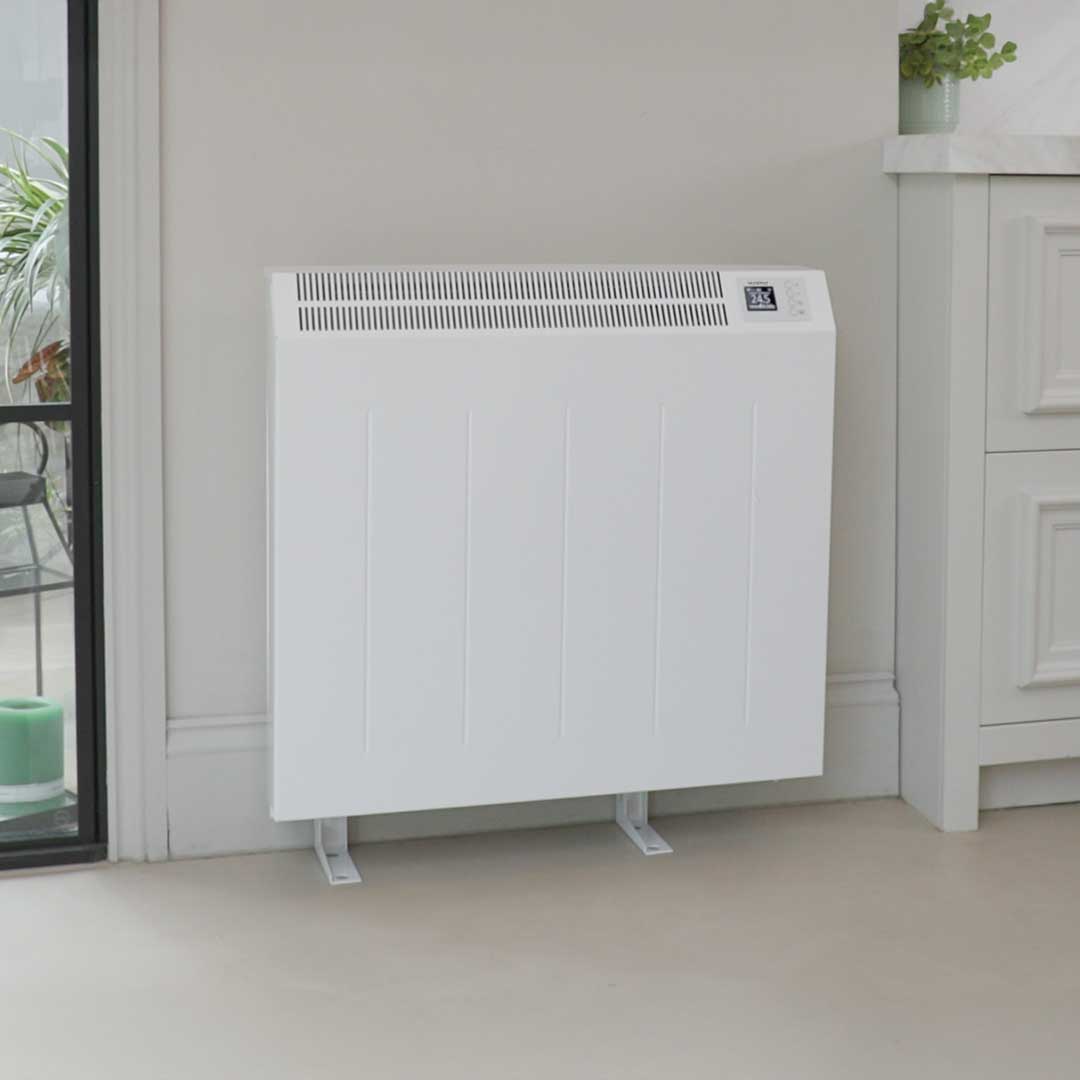
Top features for landlords:
- High heat-retentive brick core – stores energy efficiently and releases it steadily
- Intelligent automatic & phased charging – avoids over or under-heating
- Compatible with Economy tariffs – lower running costs with off-peak electricity
- Dual or single supply installation – flexible for different property setups
- SAP-compliant for HHR storage heaters – aligned with current EPC standards
- Superior insulation – maximises heat retention and reduces energy waste
Ceramic Electric Radiators
Another technology that’s likely to benefit from the updated EPC approach is ceramic electric radiators.
These radiators combine fast heat-up times with excellent heat retention. Instead of simply heating the air, ceramic radiators store warmth in their internal core and release it gradually, delivering a 50:50 balance of radiant and convective heat.
Did you know?
For the best in class, German electric radiators benefit from even greater precision engineering, build quality, and heat distribution.
Recommended for landlords: Ecostrad iQ Ceramic
If you’re upgrading a rental property, you want something that’s reliable, easy to manage, and cost-effective to run. The Ecostrad iQ Ceramic ticks those boxes and more.

Top features for landlords:
- Simple plug & go installation – ideal for quick upgrades or replacements
- Fast heat-up with strong retention – efficient, comfortable warmth
- Built-in WiFi control – manage heating directly from a smart device
- Accurate temperature control – helps avoid wasted energy
- 24/7 programming – set schedules that suit tenant lifestyles
- Room-by-room heating – allows tenants to heat only the spaces they use
Air Source Heat Pumps
Air source heat pumps are often highlighted as the future of low-carbon heating in the UK. They work by extracting heat from the outside air and transferring it indoors, making them highly efficient and well aligned with the government’s net zero plans. Under the Home Energy Model, heat pumps are expected to be assessed more accurately than under the current EPC methodology.
That said, they’re not always practical for every rental property. Installation can involve significant upgrades to insulation, radiators, or pipework, which can make retrofitting older homes expensive. For many landlords – especially those managing flats or smaller properties – modern electric heating systems can offer a simpler upgrade while still improving efficiency and control.
Plan ahead with Electric Radiators Direct
The 2030 EPC C deadline might feel a way off, but it has a habit of creeping up – much like the Renters’ Rights Act. Landlords who take a gradual approach now will be able to avoid the last-minute scramble later. When paired with improvements like insulation and ventilation, the impact of heating adds up quickly, and tenants will notice it too – warmer homes, steadier bills, and modern controls make a huge difference in a competitive rental market.
For landlords looking to get ahead, opening a trade account with Electric Radiators Direct gives you exclusive pricing, priority support, and fast UK delivery – making it easier to upgrade efficiently as EPC requirements evolve.
Key learnings
✓ Renters’ Rights and EPC reform go hand in hand – Tenancy reform and the 2030 EPC C deadline means energy efficiency is becoming a bigger priority for landlords.
✓ EPC methodology is changing – The move from SAP to the Home Energy Model will assess heating systems more realistically, not just on energy cost.
✓ Heating will carry more weight – Factors like heat-up time, retention, and real-world efficiency will play a bigger role in EPC outcomes.
✓ Modern electric heating is better positioned – Low-carbon systems like ceramic radiators, HHR storage heaters and heat pumps are set to be assessed more fairly under the new model.
✓ Planning ahead pays off – Gradual upgrades now help avoid last-minute costs, improve tenant comfort, and keep properties competitive.

